
Homeopathy is a gentle, natural, and holistic system of medicine that treats the root cause of illness by addressing the physical, mental, and emotional aspects of a person rather than merely suppressing symptoms, making it a safe and effective choice for long-term healing. It works by strengthening the body’s natural self-healing ability, improves immunity, and is suitable for people of all age groups without harmful side effects. Holistic Cure Center is different from others because it follows a truly personalized and ethical approach to healing, where every patient is given careful attention through detailed case-taking and individualized treatment plans instead of a one-size-fits-all method. The center focuses not only on curing diseases but also on restoring overall balance, emotional well-being, and quality of life, offering a compassionate, trustworthy, and holistic path toward sustainable health and wellness. 🌿
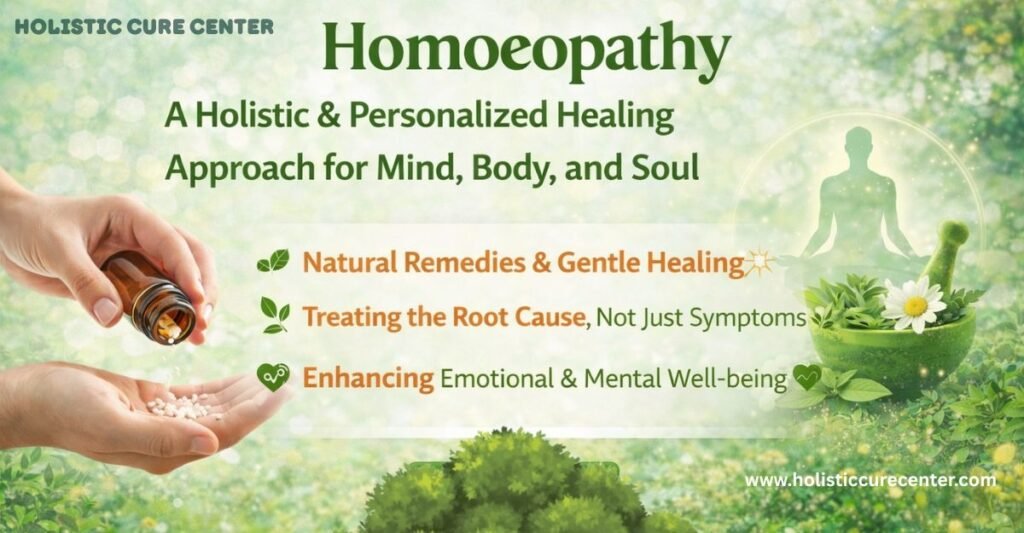
The fundamental tenet of homeopathy is that it treats the individual rather than the illness. This method acknowledges that restoring equilibrium at all levels of existence is necessary for genuine healing. Disease is viewed as an external manifestation of an underlying imbalance that affects the entire organism rather than just a local pathology.
Because of its holistic view of human health and profound respect for uniqueness, homeopathy is a medical system that differs from traditional medical practices. Homeopathy has an all-encompassing, person-centered approach, in contrast to treatment modalities that mainly concentrate on identifying and suppressing symptoms or focusing on a particular sick organ. Instead of considering illness as a singular biological dysfunction, it views the human as a whole entity, integrating mental, emotional, and physical qualities.
The fundamental tenet of homeopathy is that it treats the individual rather than the illness. This method acknowledges that restoring equilibrium at all levels of existence is necessary for genuine healing. Disease is viewed as an external manifestation of an underlying imbalance that affects the entire organism rather than just a local pathology.
The holistic and personal approach of homeopathy is thoroughly examined in this article, along with the reasons it differs from disease-centered therapy and how it promotes long-term, sustainable health and well-being.
Understanding the Holistic Philosophy of Homoeopathy
The Greek word “holos,” which means “whole,” is where the word “holistic” first appeared. This idea is a fundamental tenet of homeopathy that was developed more than 200 years ago by its originator, Dr. Samuel Hahnemann, rather than a fad or contemporary interpretation.
In homeopathy, holistic healing entails realizing that a person is an integral part of:
- Mind
- Emotions
- Physical body
- Vital force (life energy)
Any disruption to one level invariably affects the others. For instance, long-term emotional stress can impair immunity, whereas long-term physical sickness can cause sadness, anxiety, or irritability. Instead of treating symptoms separately, homeopathy acknowledges these links and addresses the patient as a whole.
Disease as an Expression of Inner Imbalance
In homeopathy, illness is seen as a significant signal from the body rather than an enemy to be defeated. Symptoms are thought of as the body’s language, an attempt to convey an internal imbalance.
Instead of treating these symptoms, homeopathy seeks to comprehend:
- The reason behind the appearance of the symptoms
- How they impact each person differently
- What fundamental imbalance has led to them
Instead of offering short-term alleviation, this viewpoint enables the practitioner to address the underlying cause of illness. The illness may recur in a different form or worsen if symptoms are only controlled without addressing the fundamental imbalance.
The Individualistic Character of Homeopathic Medicine
The personal approach of homeopathy is one of its most distinguishing characteristics. Due to their distinct physical, mental, and emotional traits, two individuals with the same medical condition may receive entirely different treatments.
Homeopathy recognizes that every person’s experience of sickness is unique. A person’s personality, emotional reactions, stress levels, lifestyle, genetic predisposition, and personal history all affect how an illness presents itself.
Example of Individualization in Practice
Think about two people who have migraines:
- Stress-induced migraines can cause irritability, noise sensitivity, and relaxation from resting in a dark area.
- Another person may have nausea, emotional sensitivity, migraines that are exacerbated by heat, and relief from fresh air.
- Since each person is unique, the homeopathic medicines would differ even though the diagnosis is the same.
Treating the Mind, Emotions, and Body as One Unit
In homeopathy, emotional and mental symptoms are just as important as physical ones. This is a crucial feature that sets it apart from traditional medicine.
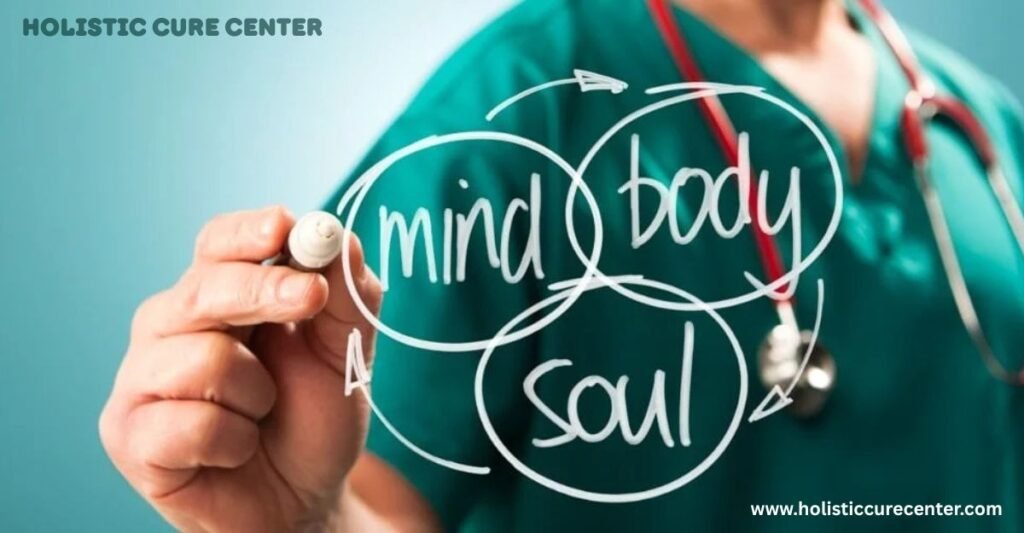
Mental and Emotional Well-being in Homeopathy
Emotional and mental states are viewed as crucial markers of general health rather than as incidental issues. Understanding the underlying causes of sickness frequently revolves around feelings of anxiety, fear, wrath, sadness, insecurity, or emotional trauma.
Homeopathic case-taking involves exploring questions such as:
- How does the person react to stress?
- What are their fears, anxieties, or emotional triggers?
- Have they experienced emotional trauma, loss, or prolonged grief?
- What is their general temperament and outlook on life?
By addressing these aspects, homeopathy supports emotional balance, mental clarity, and psychological resilience—often leading to improvement in physical symptoms as well.
The Concept of the Vital Force
- The existence of the vital force, an unseen life force that controls bodily processes and preserves harmony inside the organism, is a fundamental tenet of homeopathy.
- The body stays healthy when the vital force is robust and balanced. Disease develops when it is affected by mental stress, illnesses, trauma, a bad lifestyle, or hereditary inclinations.
- In order to encourage the body’s natural healing processes and restore equilibrium, homeopathic treatments are made to gently stimulate the vital force. Rather of imposing external control, this slight yet profound stimulation operates from within.
Gentle, Natural, and Non-Suppressive Healing
Using a particular dilution and potentization procedure, homeopathic medications are made from natural materials like plants, minerals, and animal sources. This procedure reduces toxicity while improving the substance’s energizing qualities.
As a result, homeopathy is recognized for being:
- In motion, gentle
- All age groups are safe.
- Non-forming habits
- When taken properly, it has no negative side effects.
Homeopathic treatments cooperate with the body’s innate wisdom rather than coercing it into a certain reaction.
Focus on Long-Term Health Rather Than Temporary Relief
Rapid symptom treatment is frequently prioritized in modern medicine, which is definitely helpful in acute and emergency cases. However, genuine recovery may not result from symptom suppression alone in chronic illnesses.
Homeopathy approaches health from a long-term perspective. Among its objectives are:
- Increasing immunity
- Increasing general vigor
- Preventing sickness recurrence and improving mental and emotional health
- Homeopathy promotes long-term health rather than short-term comfort by treating the underlying imbalance.

Homoeopathy in Chronic and Lifestyle Disorders
Homeopathy’s personalized and holistic approach makes it especially appropriate for long-term and lifestyle-related ailments like:
- Asthma and allergies
- Skin conditions such as psoriasis and eczema
- Digestive issues
- Unbalanced hormones
- Disorders associated with stress
- Autoimmune diseases
These disorders frequently have complicated causes that include long-term lifestyle variables, genetic susceptibility, and emotional stress. Deeper healing and a gradual return to equilibrium are made possible by homeopathy’s all-encompassing approach.
The Role of Detailed Case-Taking
A thorough consultation known as “case-taking” is the first step in homeopathic treatment. Compared to traditional medical interviews, this procedure is significantly more thorough and may involve:
- Physical signs and their characteristics
- Emotional and mental patterns
- Sleep, hunger, and vitality
- Sensitivity, likes, and dislikes
- Family history and previous illnesses
This thorough knowledge makes it possible for the practitioner to choose a treatment that closely resembles each patient’s particular symptom pattern, resulting in more efficient and customized healing.
Homoeopathy for Health Promotion and Prevention
In addition to being a medical treatment system, homeopathy is a way to stay well and avoid getting sick. Homeopathy helps people better manage stress, environmental changes, and diseases by enhancing adaptation and fortifying the vital force.
Frequent constitutional therapy can improve general wellbeing, lessen disease vulnerability, and increase resilience.
A Humanistic and Ethical Perspective on Healing
Instead of viewing the patient as a clinical case, homeopathy places a strong emphasis on empathy, listening, and understanding the patient as a person. This humanistic method promotes active involvement in the healing process and fosters trust.
Patients frequently have a sense of being heard, appreciated, and understood, which in and of itself promotes healing and mental well-being.
Homoeopathy as a Complementary Healing System
Homeopathy is a supplementary technique that can be used in conjunction with other medicinal approaches. When used appropriately, its holistic philosophy enables it to support the body during traditional treatments, reducing side effects and enhancing overall quality of life.
Final Thoughts: Overcoming Symptoms
The holistic and personalized approach of homeopathy signifies a significant change in our understanding of health and illness. Homeopathy strives for true healing rather than short-term alleviation by treating the whole person—mental, emotional, and physical—rather than concentrating only on damaged organs or diagnostic labels.
This concept acknowledges that health is a condition of balance, energy, and harmony inside the individual rather than only the absence of illness. Homeopathy provides a compassionate, individualized, and long-lasting route to wellbeing in a time when chronic illness, stress, and emotional instability are becoming more prevalent.
Homeopathy remains a timeless and applicable approach to holistic health care because it respects individuality and encourages the body’s own healing intelligence.